

























2025’s Audio Revolution: The Smartest and Most Advanced Earbuds Yet


2025’s Audio Revolution: The Smartest and Most Advanced Earbuds Yet
The humble earbud has evolved from a simple audio accessory into a sophisticated wearable computer — and 2025 is set to unleash its most radical transformation yet. Driven by AI, materials science, and neuro-acoustic engineering, the next generation of earbuds won’t just play sound; they’ll understand environments, augment reality, and even monitor your health. Here’s why your future earbuds will redefine what’s possible.
Beyond Transparency: Active Contextual Awareness
Forget manual toggling between noise cancellation and ambient modes. 2025’s flagship earbuds use multi-sensor arrays (including advanced bone conduction mics) to autonomously adapt in real-time. They’ll recognize critical sounds — a honking car, your name in a crowd, or a crying baby — while muting irrelevant noise. Powered by on-device AI processors (like a next-gen version of Qualcomm’s S7), they learn your preferences: softening loud environments in a café while enhancing dialogue clarity during meetings.
Neural Audio: Sound You Feel, Not Just Hear
Brands like Sony and Apple are pioneering "neuro-acoustic tuning." Using biometric feedback (heart rate variability, skin conductance), earbuds dynamically adjust EQ and spatial audio to reduce listening fatigue. Imagine bass that vibrates imperceptibly during workouts to boost stamina, or immersive audio fields that sync with your brain’s alpha waves for meditation. Ultra-low latency 6 GHz wireless ensures movie audio stays perfectly synced with AR glasses — no lag.
Design Revolution: Power Invisible
In 2025, "smaller and lighter" hits its zenith. Graphene drivers deliver richer sound from pea-sized units, while flexible hydrogels replace silicone tips for universal comfort that self-conforms to ear shape. Batteries borrow tech from EV innovations — solid-state cells provide 15-hour life in buds half the weight of today’s models. Case charging? A relic. Micro-solar panels on cases harness indoor light, while conductive fabrics enable 10 minutes of playback from 60 seconds on a wireless pad.
The Health Guardian in Your Ears
Beyond tracking steps, these earbuds become FDA-cleared health monitors. Built-in PPG sensors measure heart rate variability and blood oxygen, while body-temperature fluctuations warn of impending illness. EEG capabilities detect early signs of focus loss or stress with lab-grade accuracy. Paired with AI, they’ll nudge you to hydrate, breathe, or take a break — silently alerting emergency contacts if a fall is detected.
Seamlessness as Standard
Bluetooth pairing is finally dead. Powered by Ultra Wideband (UWB) chips, earbuds auto-switch between your devices with zero input. Walk toward your car? Audio shifts from phone to infotainment. Raise your hand to answer a call? Sound routes to your smartwatch. Generative AI also tackles real-time translation: whisper a question in Japanese at a Tokyo coffee shop as the response plays instantly in your ear — your voice modulated to speak Japanese in real-time.
Challenges in the Soundscape
This revolution comes with hurdles. Privacy concerns loom large as always-listening devices gain biometric access. Expect debates over data ownership and regulation. Eco-impact also remains critical — brands like Nothing lead with modular, repair-friendly designs and bio-plastics, but industry-wide standards are needed. And with premium models crossing $500, inclusion remains a barrier.
The Sonic Future Starts Now
2025’s earbuds won’t just change how we hear — they’ll transform how we interact with the world. They embed computing into our senses, turning passive listening into active augmentation. As boundaries between hearing aids, health trackers, and entertainment blur, one thing is clear: the era of the earbud as a mere accessory is over. Welcome to wearable intelligence that fits in your ear canal.
The revolution isn’t coming. It’s already playing in your head.
Related Products

Wentronic Y01 Wireless Over Ear Headphones, Noise Canceling Bluetooth 5.3 Headphones with Microphones,Hi-Res Audio,48H Playtime,Foldable,Breathable Soft Earpads for…
£34.66
DOQAUS Bluetooth Headphones Over Ear, 90H Playtime Bluetooth 5.4 Wireless Headphones, 9 EQ Modes, HiFi Stereo Bass Sound w/App Control, Soft Earpads, Built-in Mic, Headphone for…
Original price was: £28.62.£19.57Current price is: £19.57.
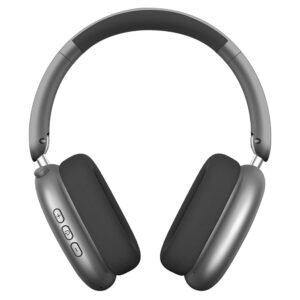
Wentronic Y01 Wireless Over Ear Headphones, Noise Canceling Bluetooth 5.3 Headphones with Microphones,Hi-Res Audio,48H Playtime,Foldable,Breathable Soft Earpads for…
Original price was: £271.26.£261.50Current price is: £261.50.

Wentronic Y01 Wireless Over Ear Headphones, Noise Canceling Bluetooth 5.3 Headphones with Microphones,Hi-Res Audio,48H Playtime,Foldable,Breathable Soft Earpads for…
£29.99